
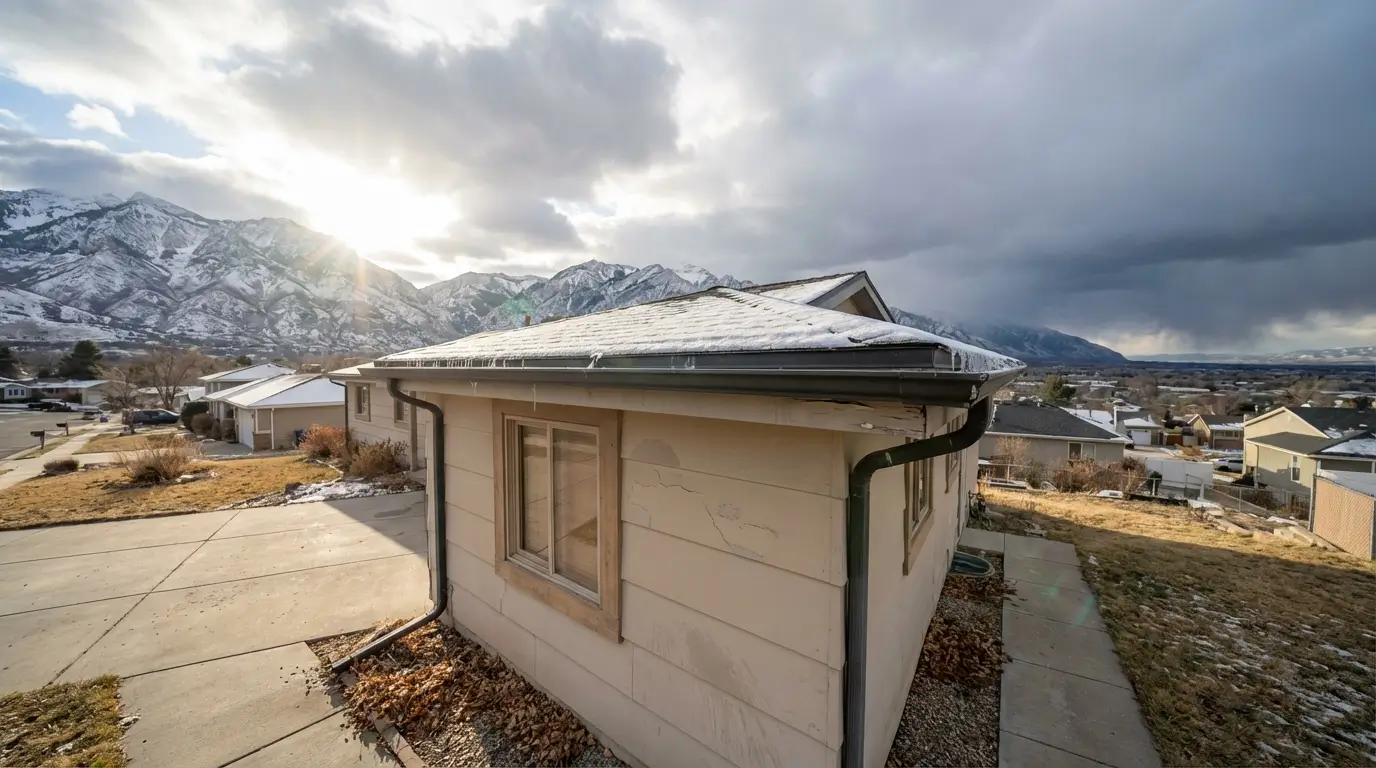
Living in Utah means learning to expect the unexpected from the weather. You can wake up to a cloudless, dry morning and be buttoning up your jacket by lunchtime.
Meanwhile, your home doesn’t get the luxury of adjusting. It stands through searing heat, sharp freezes, and sudden shifts that wear on every part of the exterior.
The elements out here are relentless. Over time, they can chew through siding, warp your trim, fade your paint, and compromise everything from your roofing materials to your foundation line.
If you have been noticing more cracks, peeling paint, warped trim, or moisture issues, you are not imagining it. These are common forms of weather damage to home exteriors caused by Utah-specific conditions.
Let’s take a closer look at the biggest causes of exterior damage in Utah, and how to stay one step ahead of them.
Intense Sun
Utah ranks among the highest for average UV levels in the country. During spring and summer, UV indexes often hit 8 or higher. At those levels, the sun actively breaks down materials.
Sun damage to home exteriors in Utah shows up in several ways, such as:
- Faded or chalky paint
- Warped siding panels
- Cracked window trim
- Dried-out wood and brittle sealants
South-facing and west-facing walls typically take the worst of the sun damage to home exterior. If your home has minimal tree cover or sits in a wide-open space, it’s even more exposed.
If you’re redoing your exterior, go with weather-resistant siding and roofing made for Utah’s desert climate. Products designed to handle high sun exposure, like fiber cement, UV-rated vinyl, and high-quality sealants, will hold up better and last longer.
Big Temperature Swings
It’s not uncommon in Utah to see 30-degree changes in a single afternoon. These swings cause siding, trim, caulk, and even framing materials to expand and contract quickly.
At first, you’ll just see small cracks, maybe around your door frames or where the trim meets the siding. But these are the start of a bigger issue: water intrusion. Once water makes its way behind the surface, it tends to cause more damage to home exterior cumulatively.
Snow Showers and Ice
Snow in northern Utah can be beautiful, but it also adds a significant amount of weight to your roofs, decks, railings, and ledges throughout the winter.
That’s bad enough on its own. However, the snow also melts and refreezes through the season, creating ice in your gutters and along the roof edges. In some cases, these ice dams can force the water back under your shingles. From there, it can drip into your attic or behind your siding.
Most of the time, you won’t notice the damage to home exterior until spring, when you start seeing soft decking, bubbling paint, or moldy smells near exterior walls.
Dry Air
People move to Utah for the dry climate, but it’s rough on homes. Low humidity pulls moisture from wood and other building materials, causing them to shrink, crack, and pull apart over time.
You’ll often see:
- Cracks in railings and fences
- Shrinking caulk joints
- Peeling paint that wasn’t expected to fail
The biggest trouble spots are where two materials meet, like the trim against your siding, or the window frames against walls. These areas rarely shrink at the same rate, so they begin to separate. At first, the gaps are barely visible. A while later, though, they turn into open invitations for water.
Wind
If you’ve lived in Salt Lake City, Park City, or anywhere else in Utah long enough, you know the wind isn’t just wind. It’s a mix of dust, grit, dry leaves, sand, and whatever else it can grab on the way through the valley or across the basin.
All of this gets pushed up against your home, like a giant, slow-moving sandblaster.
Consistent wind exposure can wear down your siding, dull your paint, and push dirt into the cracks and seams. Add in the occasional microburst or downpour, and you’ve got the perfect recipe for storm damage to Utah homes.
The impact may not be dramatic, but it piles on. One side of your house might age years faster than the others just because it’s facing the brunt of the wind.
How to Protect Your Home’s Exterior in Utah
You can’t control the climate, but you can prep your home to deal with it. Here’s how to get started, without spending every weekend on repairs.
Use Weather-Resistant Materials
Some siding and roofing materials just don’t stand a chance out here. Dry air, wild temp swings, and strong UV exposure are tough on anything soft, cheap, or poorly sealed.
Instead, we recommend:
- Fiber cement siding
- High-grade vinyl (preferably rated for sun and heat)
- Treated or composite trim
- Metal or class IV shingles
You don’t need to go into full fortress mode. However, try also not to go bargain-bin on the materials. Remember, they’re shielding your house from the elements. It pays to spend a little on them.
Check on Your Paint and Caulking
Think of paint and caulk as your home’s armor. Once it starts to wear down, your exterior is left exposed.
Always repaint before you see flakes forming. Use high-quality, UV-resistant paint. Cheap paint will cost you more in the long run when you’re repainting sooner than planned.
Check the caulking around windows, doors, siding joints, and vents. Utah’s dry air pulls sealant away as time passes.
Also, don’t forget your trim. If the paint is bubbling or the wood is looking gray and dry, it’s past time to reseal.
Keep Your Gutters Clear and Flowing
Gutters control where water goes around your home. When they’re full or not working correctly, water goes wherever it wants, usually in your siding, fascia, or foundation.
- Clean your gutters at least twice a year
- Double-check your downspouts
- Clean out or repair your gutters if you see water spilling over the sides
- Consider gutter guards if leaves and debris are a recurring headache for you
A clogged gutter might not seem like an emergency, until it turns into siding rot or foundation trouble.
Even something simple like a blocked elbow joint can cause a chain of exterior damage that’s expensive to undo.
Trim Back Anything Touching the House
Plants that sit too close to your siding can trap moisture and wear down your finishes. Trim back bushes, trees, and anything else that’s hugging the house.
Also, make sure to remove debris after storms or heavy winds. Leaves and dirt jammed into corners hold onto water, especially on ledges and trim.
Giving your home a little breathing room can prevent moisture issues from creeping in.
Keeping the area around your home clear also creates a more enjoyable sitting area or outdoor space, offering privacy and a relaxing setting.
When in Doubt, Ask a Local Expert
Utah is an incredible place to live. Between the mountains, the seasons, and open space, there’s nothing you won’t find here.
That said, this variety also puts a lot of pressure on your home’s exterior around the clock.
Good design in Utah involves choosing smart materials, planning for movement, and respecting what the weather can do. When you work with the climate instead of fighting it, your home lasts longer, performs better, and looks better year after year.
If your exterior needs a fresh start, repairs, or a full upgrade, reach out to BH Exterior & Design. As local Utah exterior home renovation experts, we know exactly what type of exteriors can last in this climate.
Schedule your consultation today and take the first step toward protecting and upgrading your home.