
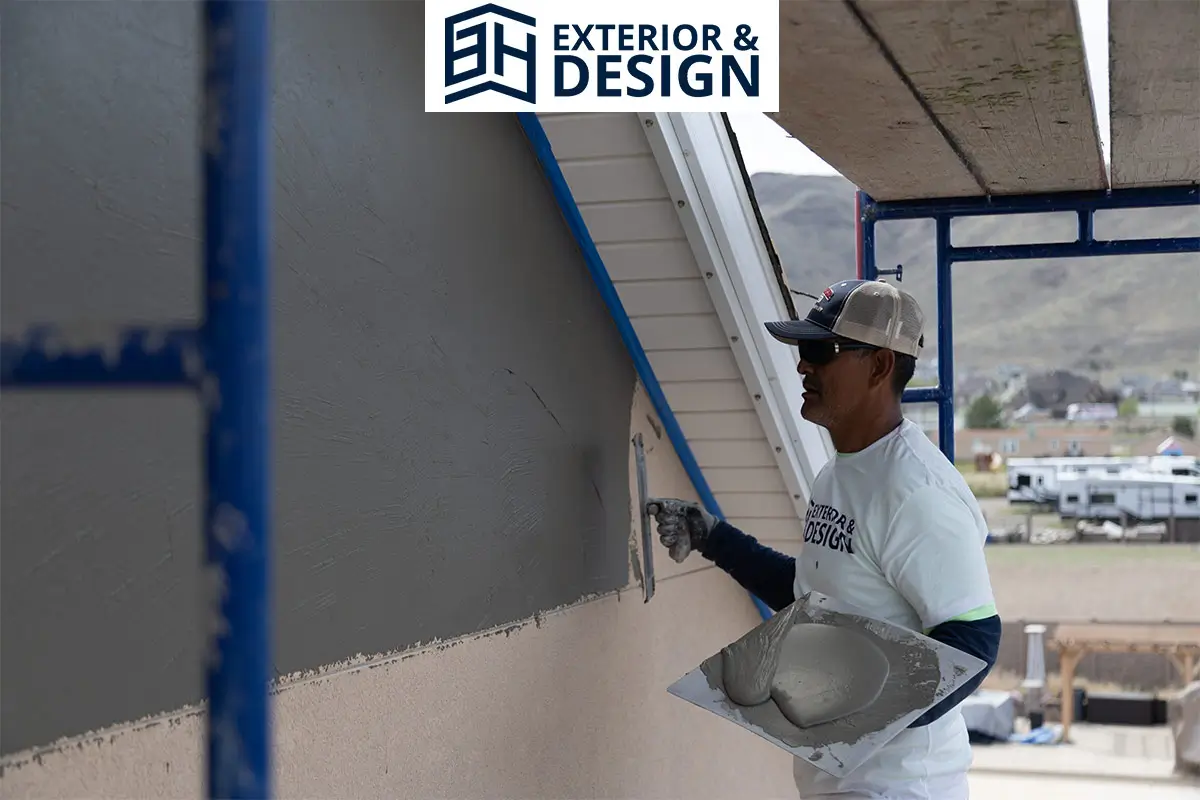
In Utah, your home’s exterior has to survive just about everything. Scorching July sun. Sudden hailstorms. Dry desert air. Snowpack that melts during the day and refreezes at night. That constant freeze-thaw cycle quietly tests every inch of your siding.
So when you’re choosing between traditional stucco and synthetic stucco (EIFS), you’re not just comparing textures. You’re deciding how your home will handle expansion and contraction, moisture exposure, insulation demands, and long-term maintenance in one of the West’s most variable climates.
Stucco dominates the Mountain region for a reason. According to the U.S. Census Bureau’s Survey of Construction, it’s used on more than half of all new single-family homes here, making it the most common exterior wall material in Utah and surrounding states.
Here’s how traditional stucco and EIFS truly compare in 2026.
How Common Are Stucco Homes Today?
According to the National Association of Home Builders (NAHB), stucco remains one of the most popular exterior wall materials in the U.S., especially in the Mountain region (which includes Utah):
- In 2023, stucco was used as the principal exterior wall material on about 26.8% of new single-family homes started nationwide.
- In the Mountain Division, stucco was the most common material, used on about 52.7% of new homes, far higher than the national average.
What Is Traditional Stucco?
Traditional stucco is a cement-based plaster finish made from cement, sand, lime, and water. It’s been used for centuries and is valued for its durability, fire resistance, and long-lasting performance, features that work well in Utah’s dry climate.
Application
Traditional stucco is applied in three layers over a weather-resistant barrier and metal lath:
- Scratch coat: Provides a rough surface for adhesion
- Brown coat: Levels and strengthens the wall
- Finish coat: Adds texture and color
Once cured, it forms a hard, breathable shell that stands up to both hot summers and cold winters.
Why It Works in Utah
Utah’s climate is demanding. Traditional stucco has remained a popular choice across the state because it performs reliably under local conditions while also fitting the architectural character of many Utah neighborhoods.
Here’s why it continues to hold up:
Fire Resistance:
Made from non-combustible materials, a three-coat system can provide up to a 1-hour fire-resistance rating, adding extra safety compared to wood siding.
Moisture Management:
Modern building codes require water-resistive barriers and drainage layers behind stucco, which allow walls to shed water while letting vapor escape, reducing the risk of long-term moisture damage.
Local Style:
You will often see traditional stucco on older Salt Lake City homes, ranch-style houses, and craftsman designs throughout Utah.
What Is Synthetic Stucco (EIFS)?
Synthetic stucco, or Exterior Insulation and Finish System (EIFS), is a modern multi-layer wall system that looks like traditional stucco but adds insulation, energy efficiency, and flexibility.
Application
EIFS is installed as a layered system designed to improve insulation and flexibility. Foam insulation boards are first attached directly to the exterior walls, creating a continuous insulation layer. A fiberglass mesh is then embedded into a base coat to add strength and impact resistance. Finally, a thin acrylic finish coat is applied, giving the surface its texture and color.
Because of this layered approach, EIFS is lighter and thinner than traditional stucco while still providing continuous exterior insulation that improves overall energy efficiency.
Energy Efficiency Benefits
EIFS not only protects your walls but also helps lower your heating and cooling costs, a major advantage in Utah’s hot summers and cold winters:
Reduces Energy Use
Energy modeling shows that EIFS systems with continuous insulation and integrated air barriers can reduce annual heating and cooling energy use by about 20-45 % compared to wall assemblies that rely only on traditional cavity insulation.
Improves Comfort
The continuous insulation layer and air-barrier performance help keep indoor temperatures more consistent throughout the year. By minimizing drafts and reducing hot and cold spots, the building envelope creates a more stable indoor environment that feels comfortable in every season.
Utility Savings
Lower energy demands can lead to noticeable reductions in utility bills over time, especially in regions with wide seasonal temperature swings. Because the system reduces heat loss in winter and heat gain in summer, HVAC systems don’t have to work as hard, which can translate into meaningful long-term savings.
Code-Friendly
EIFS with continuous insulation complies with modern energy-efficiency standards such as the International Energy Conservation Code (IECC) and ASHRAE 90.1, which increasingly require continuous insulation for above-grade exterior walls.
Stucco System Components
While traditional stucco and synthetic stucco (EIFS) may look similar from the street, they’re built very differently beneath the surface. Understanding what goes into each system helps explain how they perform in Utah’s climate.
Traditional Stucco
Traditional stucco is built using a three-layer system that includes a scratch coat, a brown coat, and a finish coat. Behind these layers, a weather barrier such as building paper or a waterproof membrane helps protect the home from moisture.
Homeowners can choose from a variety of finish options, including smooth, sand, dash, or lace textures, with colors that can be tinted or painted to suit different architectural styles.
Synthetic Stucco (EIFS)
Synthetic stucco is made up of foam insulation boards, a fiberglass mesh embedded in a base coat, and a durable acrylic finish. One of its biggest advantages is the built-in continuous insulation, which adds energy efficiency without significantly increasing wall thickness. EIFS also offers a wide range of color and texture options, with finishes designed to resist fading over time.
Synthetic Stucco vs Traditional Stucco: Comparison
| Feature | Traditional Stucco | Synthetic Stucco (EIFS) |
| Composition | Scratch coat, brown coat, finish coat | Foam insulation, fiberglass mesh, acrylic finish |
| Insulation | None | Built-in continuous insulation |
| Durability | Very durable, fire-resistant | Durable, flexible, energy-efficient |
| Maintenance | Low, but can crack over time | Low, less prone to cracking if installed correctly |
| Cost | Moderate | Slightly higher upfront, but can save on energy bills |
| Finish Options | Smooth, sand, dash, lace textures | Wide range of colors and textures, fade-resistant |
How Does Each Perform in Utah’s Freeze-Thaw Climate?
Utah’s frequent freeze-thaw cycles are one of the biggest stress tests for exterior finishes. When temperatures swing above and below freezing, even small amounts of trapped moisture can create long-term damage.
Here’s how traditional stucco and EIFS respond under those conditions:
Traditional Stucco
Traditional stucco is strong, but it’s also rigid. If moisture gets into small cracks and freezes, it expands, and over time, that can widen cracks or cause surface damage. This doesn’t mean stucco is “bad” for Utah; it just means proper installation, drainage, and maintenance matter.
EIFS
EIFS systems are designed to manage moisture through drainage layers. When installed correctly, they handle Utah’s freeze-thaw cycles well. The risk comes from poor detailing; if water gets trapped behind the system, freeze-thaw action can cause problems.
Installation and Repair Considerations
Installation and maintenance play a big role in how well any stucco system performs over time. While both traditional stucco and EIFS can be durable exterior finishes, they differ in how they’re installed and how repairs are typically handled.
Traditional Stucco
Traditional stucco installation is labor-intensive and requires proper curing time between coats, which means the process can take longer than some modern systems. Over time, small hairline cracks are common and are often simple enough for homeowners to repair themselves. Larger repairs, however, may involve reapplying stucco and carefully matching textures and colors, which can be more challenging and often requires professional help.
Synthetic Stucco (EIFS)
EIFS repairs usually require trained professionals who understand the system’s layers and moisture-management details. To keep EIFS performing as intended, annual inspections of sealants, joints, and flashings are recommended. These routine checks help prevent moisture intrusion and protect the wall system over the long term.
Cost and Lifespan
When it comes to long-term value, lifespan and maintenance expectations are important factors to consider. Traditional stucco is known for its durability and can last anywhere from 50 to 80 years with routine maintenance.
EIFS systems typically have a shorter lifespan, averaging 30 to 50 years, though proper installation and regular upkeep can significantly extend their performance and energy-saving benefits.
Choosing the Right Stucco for Your Utah Home
Choosing between traditional stucco and EIFS comes down to how you want your home to perform over time. Both options work well in Utah, but each serves different priorities depending on climate demands, energy goals, budget, and overall style.
Climate and Performance
Utah’s freeze-thaw cycles, snow, and summer heat all put stress on exterior walls. Traditional stucco performs well when properly installed and maintained, but it can develop small cracks over time. EIFS offers more flexibility and built-in drainage, which can help manage moisture and temperature changes when detailed correctly.
Energy Efficiency Goals
If reducing heating and cooling costs is a top priority, EIFS has a clear advantage. Its continuous exterior insulation helps minimize heat loss in winter and heat gain in summer, making it a strong choice for homeowners focused on energy efficiency and indoor comfort.
Budget and Long-Term Costs
Traditional stucco generally costs less upfront, which can make it appealing for budget-conscious projects. EIFS typically comes with a higher initial price tag, but the added insulation can help offset those costs over time through lower energy bills.
Style and Appearance
Both traditional stucco and EIFS offer a wide range of textures and colors, making them versatile options for many architectural styles. Whether you prefer a classic, textured finish or a smoother, more modern look, either system can be tailored to match your home’s design.
Find the Right Finish for Your Utah Home
Choosing between traditional stucco and synthetic stucco (EIFS) affects your home’s appearance, efficiency, and longevity in Utah’s demanding climate. Both finishes offer proven performance when installed correctly, but the right choice depends on your priorities and long-term goals.
If you are planning a new build, exterior remodel, or stucco repair, working with experienced local professionals who understand Utah’s climate is essential to ensuring proper installation, long-term durability, and compliance with regional building requirements.
BH Exterior & Design offers expert guidance, high-quality workmanship, and solutions designed specifically for Utah homes. Let us help you choose an exterior finish that looks great, performs well, and lasts for years to come.
Contact us today to get started.
FAQs:
Q1. Which stucco type is best for Utah’s weather?
Both are good options! EIFS keeps your home warmer in winter, while traditional stucco stands up well to Utah’s dry, hot summers.
Q2. Can I fix traditional stucco myself?
If it is just tiny cracks, go for it! But if it’s bigger damage, it’s safer (and smarter) to call in a pro.
Q3. Is EIFS more expensive?
Yes, it usually costs about 10–15% more up front. But you will likely save on your energy bills down the road.
Q4. Can I paint my stucco?
Absolutely! Just make sure you use paint made for stucco so your walls can still “breathe.”
Q5. How long will these finishes last?
Traditional stucco can last over 50 years. EIFS can go 30 years or more; just keep up with the maintenance.
Q6. Why does EIFS help with energy savings?
EIFS has built-in foam insulation, which means your house holds heat in winter and stays cooler in summer. That helps cut your heating and cooling bills!