

TL;DR
- Water expands by about 9% when it freezes. When moisture is trapped in susceptible cracks, repeated freezing and thawing can widen openings and damage surrounding material.
- Stucco, mortar joints, caulk lines, window seals, and roof flashing are the most vulnerable spots.
- Watch for cracks that grow, gaps in caulk, bubbling paint, and white residue on stucco or brick.
- Sealing small openings in fall costs far less than repairing water damage behind the wall in spring.
A hairline crack in your stucco or a thin gap in the caulk around a window rarely looks urgent in the fall. By spring, that same opening may have widened, with water moving behind the surface where you cannot see it.
The cause is ice expansion in exterior cracks. Water seeps into small openings, freezes overnight, expands, and pries the material apart. Northern Utah’s sunny winter afternoons and freezing nights make this cycle a regular event.
Here is how ice expansion damages exterior cracks and seals, where to look, and what to do before small gaps become costly repairs.
How Ice Expansion Affects Exterior Cracks
Most liquids shrink when they freeze. Water does the opposite, growing by roughly 9% in volume. Inside a tight crack, that growth has nowhere to go but outward. Geologists call it frost wedging, and on a house it follows a simple cycle:
- Water gets in. Rain, snowmelt, or sprinkler spray enters a hairline crack or a gap in old caulk.
- It freezes and expands. Overnight, the ice presses against both sides of the opening.
- It thaws and sinks deeper. The crack is now slightly wider, so more water enters.
- The cycle repeats. Dozens of cycles in one winter can turn a hairline crack into an open channel to the sheathing and framing.
Did You Know: Spring and fall often cause more freeze-thaw damage than midwinter, because temperatures swing above and below 32°F more often.

Where Ice Expansion in Exterior Cracks Does the Most Damage
These areas usually show freeze-thaw damage first.
Stucco Walls
Stucco is rigid and porous. Once ice widens hairline cracks, moisture can reach the lath and sheathing beneath. A professional assessment can determine whether the wall needs localized repairs, moisture remediation, or stucco resurfacing.
Brick, Stone, and Mortar
Water collects in mortar joints, and repeated freezing causes spalling, where the surface flakes or pops off. Loose mortar opens a direct path into the wall.
Caulk, Window, and Door Seals
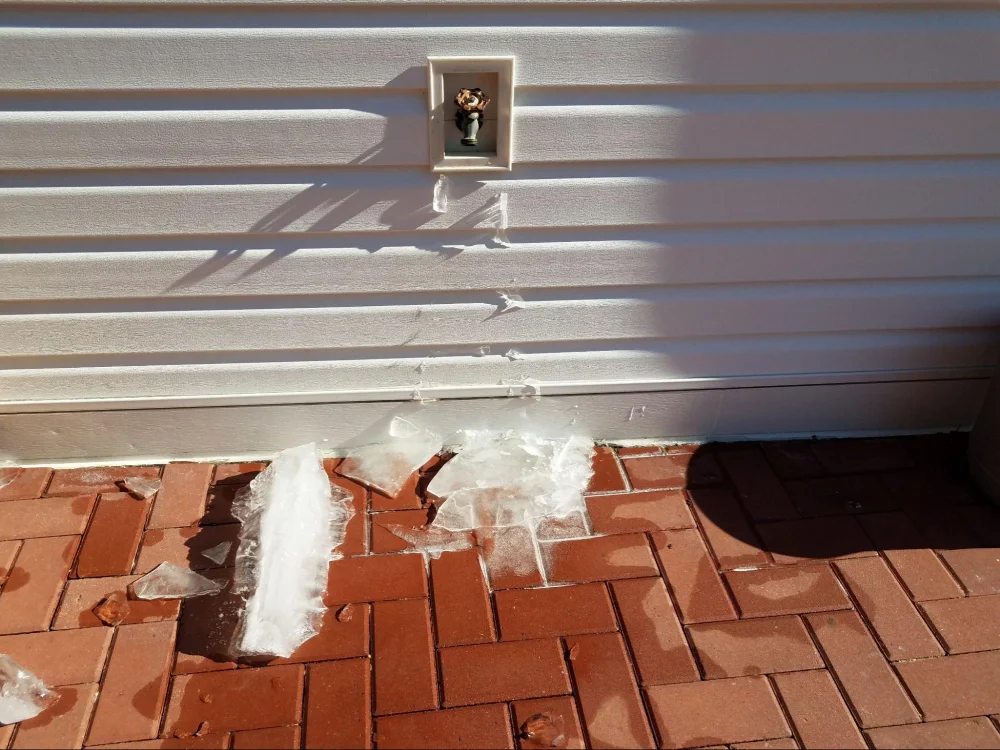
Ice damage to exterior seals usually starts with age, as sealant hardens and shrinks. Water collects behind small separations, and ice pushes the bead away completely, letting water reach sills and rough openings.
Siding and Trim
Wood and fiber cement absorb water at cut ends and unsealed edges, leading to swelling, cracking, and paint failure. Water behind cracked vinyl panels can freeze against the sheathing.
Roof Edges and Flashing
Ice under loose flashing can lift materials around chimneys, vents, and roof edges. Our guide to roof edge system problems covers the warning signs.
What To Check: Focus on transitions where two materials meet, like stucco against a window frame. These joints move the most and usually fail first.
Why Small Cracks Turn Into Big Repairs
Winter exterior crack damage rarely stays on the surface. Once water gets behind your cladding, it can soak the sheathing, wet the insulation, and rot the framing long before anything shows inside.
Insurance Information Institute data shows that water damage and freezing claims averaged $15,400 from 2019 to 2023. This broad category includes losses beyond freeze-thaw damage to exterior walls, but it shows how costly hidden moisture problems can become.
Cost Snapshot: Resealing a few windows or patching hairline cracks is usually a modest repair, depending on access, preparation, and curing requirements. Replacing rotted sheathing or resurfacing an entire wall is a much larger project. For stucco homes, our stucco resurfacing cost guide breaks down what affects pricing.
How to Protect Exterior Cracks and Seals Before Winter
The best way to prevent winter damage to cracks and seals is to stop water in fall, before it freezes.
- Inspect before the first hard freeze. Check every window, door, vent, and fixture where the wall has an opening.
- Replace failed sealant properly. Remove the failed sealant, prepare the joint, and apply a compatible exterior-rated product in accordance with its temperature, moisture, and curing requirements. Do not seal over weep holes or intentional drainage openings.
- Match repairs to the material. A rigid patch on a flexible joint cracks again, and the wrong mortar can damage softer brick.
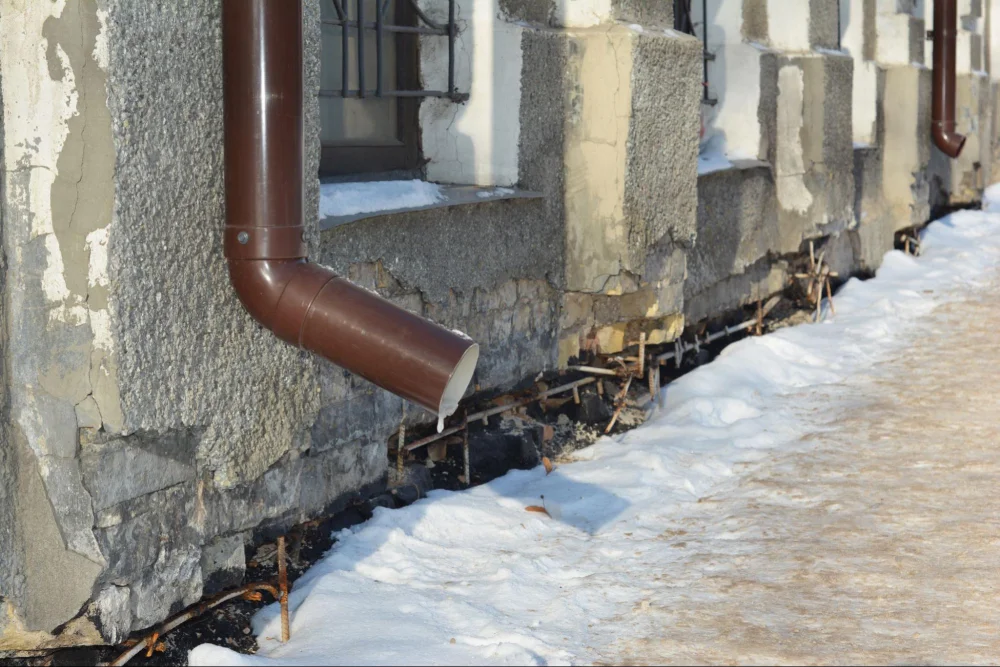
- Manage water. Clean gutters, extend downspouts away from the foundation, and keep sprinklers off the walls.
If cracking shows up on several walls or materials are near the end of their lifespan, patching may no longer make sense. An exterior renovation can address siding, stucco, trim, and seals as one system.
Tip: Take dated photos of cracks this fall. Comparing them in spring shows whether they are stable or growing.
When to Call a Professional
Call a professional if cracks return after patching, stucco or siding feels soft, sills show rot, or moisture appears indoors. A contractor can test for hidden moisture and tell you whether the fix is a simple reseal or a larger repair. These questions to ask before hiring an exterior contractor can help you compare options.
Ask Before Hiring: Will you check for moisture behind the surface, not just the visible crack?
Protect Your Home From Winter Damage With BH Exterior and Design
Ice expansion works one cold night at a time, and catching cracks early is the most affordable way to keep water out of your walls. BH Exterior and Design helps Northern Utah homeowners find and fix weak points, from resealing windows and repairing stucco to full siding and exterior upgrades.
Contact us to schedule an exterior inspection before the next hard freeze.
FAQs: Ice Expansion Exterior Cracks
How does ice expansion damage exterior cracks?
Water in a crack freezes and expands by about 9%, widening the crack. Each thaw lets water move deeper before the next freeze.
Can I caulk over an old seal before winter?
It is better to remove the old sealant first. New caulk over a failed bead traps moisture and separates quickly.
Are hairline cracks in stucco a problem?
Not always. Stable hairline cracks are common, but cracks that widen, run diagonally from window corners, or show staining should be inspected.